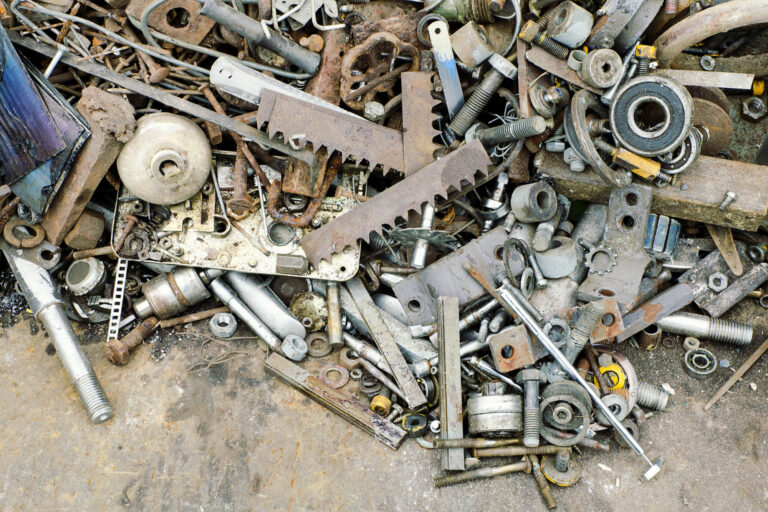
Aluminium recovery returns used metal to production, which cuts the need for newly mined bauxite. It saves resources, lowers energy use, and supports stronger supply chains.
Why Aluminium Production Uses Raw Materials
Primary aluminum production starts with bauxite, which is mined and refined into alumina. The alumina is then turned into aluminium in an energy-heavy electric process.
Mining, refining, and smelting need energy, plant, transport, and other inputs. As demand for aluminium rises in construction, vehicles, and manufacturing, pressure on natural resources also rises.
Aluminum recycling gives another route. Recovered metal can replace part of primary production and reduce the need for virgin raw materials.
How Aluminium Recovery Conserves Natural Resources
Less Bauxite Extraction
Recovering aluminium cuts the amount of bauxite needed to make new metal. The European aluminium recycling industry says recycling one tonne of aluminium can save up to eight tonnes of bauxite.
This shows how scrap recovery can save resources before they are dug up, moved, and processed.
Mining can change land and needs careful management of water and residues. Using recovered material can reduce the demand tied to more extraction and refining.
Keeping Metal in Use
Aluminium can be recycled repeatedly, so it fits a circular system. Collection and processing let metal from cans, frames, machinery, and production offcuts return to manufacturing instead of being thrown away.
The International Aluminium Institute says around 75% of all aluminium ever made is still in use today.
That is why end-of-life collection matters. Recovering existing metal helps protect a resource that has already taken energy and investment to produce.
Aluminium Recycling Statistics and Energy Savings
The energy gain from recycling is one of the strongest reasons to recover aluminium. The International Aluminium Institute says recycled aluminium needs about 95.5% less energy than primary aluminum production.
The comparison shows that primary aluminium uses about 186 gigajoules per tonne. In contrast, recycled aluminium uses only 8.3 gigajoules per tonne.
Key Aluminium Recycling Statistics
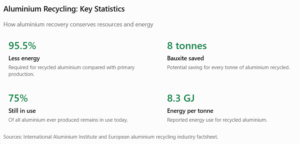
Industry sources provide these figures, and you should read them with their stated boundaries and assumptions. Actual results vary with electricity mix, scrap quality, transport distance, and processing technology.
Even so, the gap in energy demand shows why recycled content can help reduce the resource and environmental intensity of manufactured products.
The Role of Aluminium Scrap in Manufacturing
Businesses generate aluminium scrap through cutting, machining, stamping, fabrication, and product assembly. Offcuts, turnings, rejected parts, and old equipment may contain usable metal.
When this material is mixed with general waste, recovery becomes harder and its quality may drop.
Separating aluminum scrap at the point where it is made helps protect material value. Clean, identifiable scrap is easier for recycling facilities to sort and process.
Different alloys may need separate handling because their mix affects how the recovered metal can be used.
Recovering Production Offcuts
Sheet, profile, and extrusion offcuts can often be collected for recycling. Machining swarf and metal turnings may also be usable, although oil or coolant residue can affect handling.
Businesses should use clear steps and qualified recycling partners to manage these streams safely.
A simple waste review can show where aluminium waste arises, how much is produced, and whether collection needs to improve.
Supporting Sustainable Supply Chains
Recovered aluminium gives manufacturers another source of material. It can cut dependence on newly mined inputs and help supply chains use resources already in circulation.
This matters when businesses face price swings, supply shocks, or customer demand for lower-impact products.
Recycled content can also support product and buying goals, as long as claims are accurate and backed by evidence. Companies should check material specs, alloy needs, and supplier papers before changing production inputs.
Aluminium recovery is not a full substitute for primary aluminum. Demand, alloy quality, and product design mean some primary metal is still needed.
Still, using recovered material where suitable can cut the amount of virgin material required.
How Businesses Can Improve Aluminium Recovery
Businesses can start by finding where aluminium waste comes from across purchasing, production, maintenance, and end-of-life equipment.
Clear separation steps help staff sort aluminium from mixed metals and general waste. Labels, marked bins, and staff guidance can make segregation easier to keep up.
Companies should discuss pickup frequency, acceptable grades, and cleanliness limits with their recycler.
Keeping aluminium separate, when possible, can help protect quality. Records of weight, collections, and destinations also support internal reporting and responsible waste management.
Recycling programs work best when duties are clear and performance is reviewed. Businesses can compare recovered amounts over time, spot avoidable losses, and set realistic targets.
Recovery should sit within wider waste prevention work because avoiding unnecessary material use is valuable alongside recycling.
For businesses reviewing metal waste, a dedicated aluminium recycling service can help find suitable recovery routes and improve scrap handling.
Aluminium Recovery and the Circular Economy
A circular economy aims to keep products and materials useful for as long as possible.
Aluminium recovery supports this model by collecting metal after use, processing it, and returning it to manufacturing. Designing products for easier disassembly, identifying alloys, and improving collection systems can make future recovery more effective.
The benefits reach beyond one factory. More reliable collection and processing can strengthen recycling infrastructure, support skilled jobs, and reduce the amount of valuable metal sent for disposal.
Collaboration between manufacturers, product users, recyclers, and officials helps close material loops.
Aluminium recovery reduces demand for raw materials by sending used products and manufacturing scrap back into the supply chain. It can conserve bauxite, cut energy use, and support more sustainable aluminium production.
With a large share of aluminium ever made still in use, recovery gives businesses a practical way to protect material value.
Better segregation, reliable recycling partners, and tracked recycling programs help keep aluminium in circulation and reduce dependence on virgin resources.