Metal extraction means mining, processing, and refining ore to make useful metals for construction, manufacturing, and other industries.
Most metals are not found in pure form. They are usually mixed with other elements in rock and mineral deposits. They must go through several steps before they are ready for industry.
Metals such as iron, copper, aluminium, zinc, and nickel are vital for construction, transport, electrical equipment, and manufacturing. Each metal needs the right extraction method based on its chemistry and the minerals in the ore.
Understanding how metal is extracted from ore shows how natural resources become useful materials and why efficient processing matters.
What Is Metal Ore?
Metal ore is a natural rock or mineral that holds enough valuable metal to make extraction worth the cost. It often contains metal-bearing minerals mixed with waste material called gangue.
For example, iron is commonly obtained from hematite and magnetite, while copper is often taken from copper ore. Aluminium production mainly depends on bauxite, which contains aluminium-bearing minerals.
Not every mineral deposit is worth mining. Its value depends on metal content, processing costs, energy use, available technology, and market demand.
The Main Stages of Metal Extraction
The metal extraction process has several steps that separate valuable minerals from unwanted material. The methods differ by metal, but most operations follow the same basic path.
1. Mining the Ore
Mining is the first stage of metal extraction. Companies find deposits through site surveys, drilling, and sampling before removing the ore from the ground.
Open-pit mining is used when deposits are close to the surface. Large excavators and other machines remove soil and rock to reach the valuable minerals.
Underground mining is used when deposits are deeper below the surface. Workers and special equipment reach these resources through tunnels and shafts.
Once removed, the ore goes to a processing plant for more treatment.
2. Crushing and Grinding
Mined ore often contains large rocks that must be broken down before valuable minerals can be separated. Crushing machines break the material into smaller pieces, while grinding equipment makes finer particles.
This step helps free valuable minerals from waste rock. The needed particle size depends on the mineral mix and the separation method.
Good crushing and grinding improve later processing steps and help raise the amount of metal recovered.
3. Concentrating and Separating Minerals
After grinding, the ore goes through mineral separation to remove unwanted material and raise the level of valuable minerals. The final product is called concentrate.
Froth flotation is commonly used for copper, lead, and zinc sulphide ores. They add chemicals to finely ground ore mixed with water. Air bubbles attach to selected mineral particles and carry them to the surface, where the froth is collected.
Magnetic separation uses magnetic equipment to separate magnetic minerals from non-magnetic material. This method is especially useful for some iron ores.
Gravity separation uses differences in mineral density. Heavier valuable particles are separated from lighter waste using equipment such as shaking tables and spirals.
Chemical separation uses suitable solutions to dissolve specific metals from ore, so they can be recovered from the liquid.
The best method depends on the mineral type, ore quality, and needed recovery rate.
4. Smelting the Concentrate
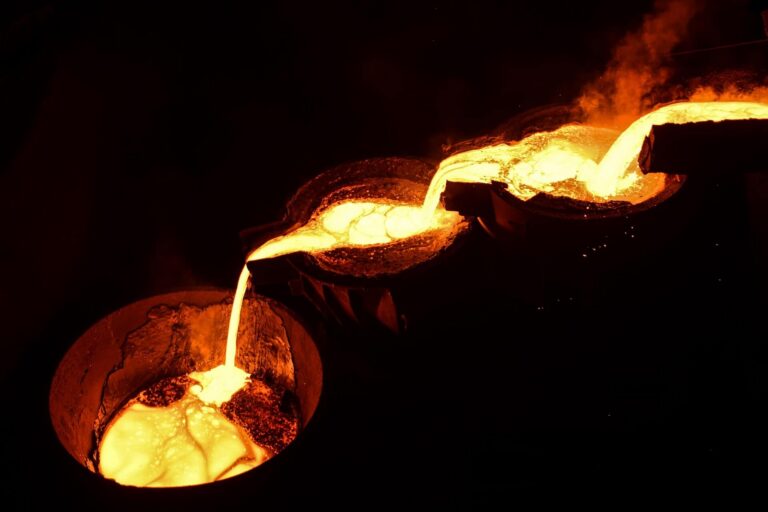
Smelting uses high heat and chemical reactions to remove metal from concentrated ore. It is commonly used to produce iron, copper, lead, and nickel.
During this process, workers heat the concentrate in a furnace, often with reducing agents and fluxes. These materials help separate the metal from unwanted compounds and impurities.
Iron, for example, is made by reducing iron oxides in a blast furnace with carbon monoxide from coke. This makes molten iron, which can later be turned into steel.
Copper sulphide concentrates are also smelted to make blister copper. This middle product needs more treatment before it reaches commercial purity.
Smelting can create slag and gases, which must be managed carefully to limit environmental harm.
5. Refining the Extracted Metal
Metal made after smelting or other extraction steps may still contain impurities. Refining removes these unwanted elements so the metal meets the needed purity and quality.
Electric refining uses electricity to move metal from an impure anode to a pure cathode through an electrolyte solution. Many companies widely use this method in copper production.
Chemical refining uses controlled chemical reactions to remove unwanted elements or recover specific metals from mixtures.
Fire refining uses heat and chemical treatment to reduce impurities.
The finished metal is tested to make sure it meets the required standards for industrial use.
How Different Metals Are Extracted from Ore
Different metals need different extraction methods because their chemistry and mineral forms vary.
Iron
Common ore: Hematite and magnetite
Extraction method: Blast furnace reduction.
Copper
Common ore: Copper ore
Extraction method: Flotation, smelting, and refining.
Aluminium
Common ore: Bauxite
Extraction method: Bayer process and electric process.
Zinc
Common ore: Sphalerite
Extraction method: Roasting, leaching, or smelting.
Nickel
Common ore: Laterite and sulphide ores
Extraction method: Heat or wet processing.
Lead
Common ore: Galena
Extraction method: Smelting and refining.
Aluminium is a useful example of how extraction methods differ. They first process bauxite into alumina using the Bayer process. The alumina is then turned into aluminium with electricity in the Hall-Héroult process.
According to the International Aluminium Institute, about four to five tonnes of bauxite are needed to produce two tonnes of alumina and, finally, one tonne of aluminium.
Metal Extraction Statistics and Industry Importance
Metal extraction supports construction, engineering, transport, electronics, and manufacturing. Reliable metal supplies are essential for infrastructure, machinery, and everyday products.
According to the US Geological Survey, the estimated value of US metal mine production reached about $33.5 billion in 2024. Gold accounted for 35% of this value, copper 30%, and iron ore 16%.
Copper production also shows the value of combining mining with secondary metal recovery. USGS estimates indicate that US mines produced about one million tonnes of usable copper in 2025, while around 160,000 tonnes were recovered from old scrap.
These figures show the value of both primary metal extraction and recycling for industrial material supply.
Environmental Impacts of Metal Extraction
Although metal extraction provides vital raw materials, mining and processing can create environmental problems. These include land disturbance, habitat loss, water use, air pollution, and greenhouse gas emissions.
Crushing, grinding, and smelting need energy, while some extraction methods use chemical solutions that must be managed carefully to prevent soil and water pollution.
Mining companies can reduce these impacts with better processing technology, water treatment systems, efficient equipment, and responsible waste management.
Metal recycling also helps reduce demand for newly mined resources by recovering valuable materials from existing products and industrial waste.
Why Metal Recycling Matters
Metal extraction does not have to rely only on newly mined ore. Manufacturers, construction companies, and electrical equipment producers can process scrap metal from their operations and end-of-life products to recover valuable materials.
Recycling helps save natural resources, cuts waste, and gives manufacturers another source of raw material. It also supports a circular economy by keeping metals in use for longer.
According to the US Geological Survey, recycled metals and mineral products in the United States were valued at about $48 billion in 2024.
Businesses can support resource recovery by using professional metal recycling services to recover reusable materials from industrial and manufacturing operations.
Metal extraction turns natural ore into valuable materials used across modern industries. The process usually includes mining, crushing, grinding, separation, smelting, and refining, although each metal needs different methods.
Better extraction efficiency and more metal recycling can help save natural resources, cut waste, and support more sustainable manufacturing.