What Is Eddy Current Separation in Metal Recycling?

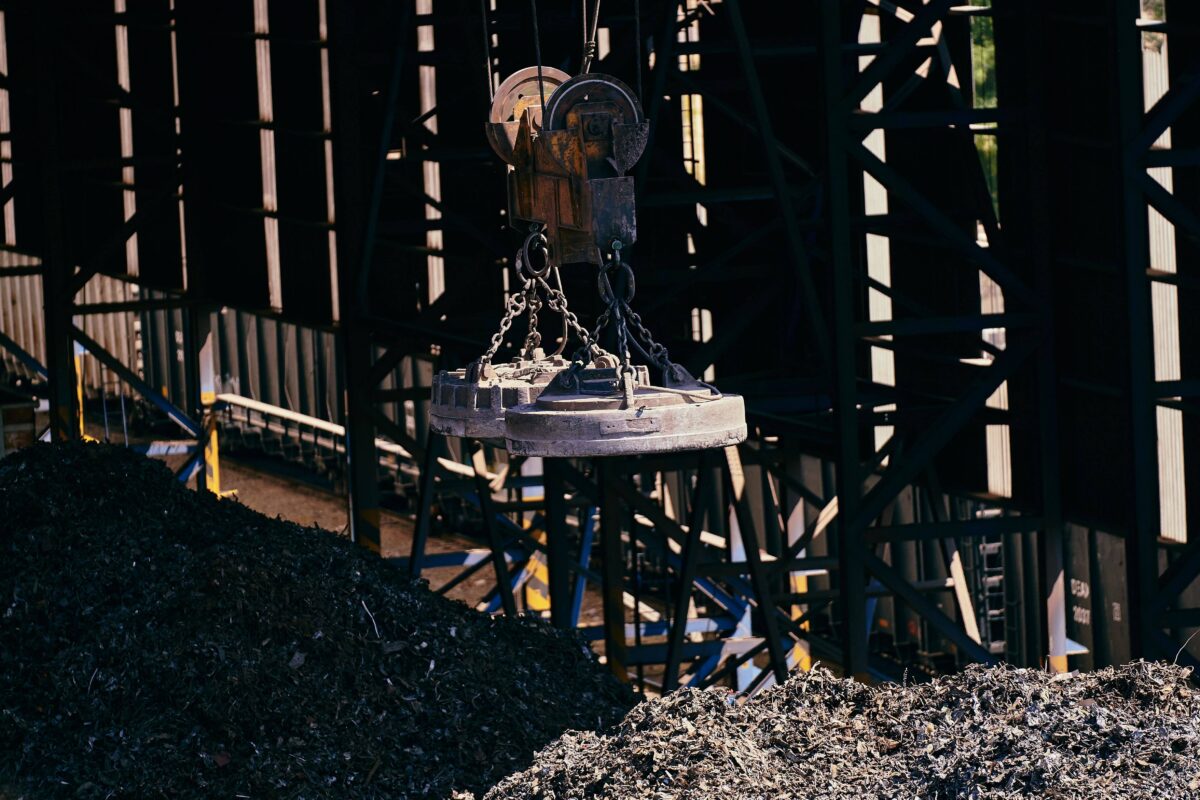
Eddy current separation in metal recycling is a physical sorting process that uses electromagnetic forces to recover non-ferrous metals from mixed waste. It is particularly effective for separating conductive metals, such as aluminium, copper and brass, from plastic, glass, wood and other non-metallic materials.
Unlike conventional magnetic separation, which attracts iron and steel, this technology uses changing magnetic fields to generate electrical currents inside conductive metals. These currents create a repulsive force that pushes metal particles away from the remaining waste.
Eddy current separators are widely used in material recovery facilities, automotive recycling plants, electronic waste processing and industrial scrap operations. They help improve metal recoveries, reduce material losses and return valuable resources to the manufacturing supply chain.
How Does Eddy Current Separation Work?
An eddy current separator uses a rapidly rotating magnetic rotor to generate a changing magnetic field. When conductive metal particles pass through this field, electrical currents develop inside them. These currents create their own magnetic fields, producing a force that changes the direction of the particles.
The separation process takes place as materials travel along a conveyor belt and pass over the magnetic rotor.
1. Preparing the Material Stream
The first stage involves preparing the mixed waste for separation. Materials are collected and processed using equipment such as shredders and screening machines.
Shredding breaks larger objects into smaller pieces, making individual materials easier to separate. Screening removes particles that are too large or too small for the equipment.
An even material stream and consistent particle sizes help improve separation performance.
2. Removing Ferrous Metals
Before materials reach the eddy current separator, a ferrous metal separator is generally used to remove iron and steel.
These metals respond to magnetic attraction and can be collected using overband magnets or magnetic drum separators.
Removing ferrous particles before the next processing stage helps prevent unwanted materials from contaminating the recovered non-ferrous metal fraction. It also reduces the risk of interference with the separation equipment.
3. Generating Eddy Currents
After ferrous metals have been removed, the remaining material moves towards the eddy current separator.
Inside the machine, a high-speed rotor containing alternating magnetic poles produces a rapidly changing magnetic field.
When conductive metals such as aluminium and copper pass through this field, electrical currents are induced within the particles. These are known as eddy currents.
The electrical currents generate a secondary magnetic field that interacts with the separator’s magnetic field. This interaction creates a repulsive force, pushing conductive metal particles away from their normal conveyor path.
4. Separating Non-Ferrous Metals
The repulsive force causes conductive metal particles to travel further away from the conveyor than non-metallic materials.
An adjustable dividing plate, known as a splitter, directs the different materials into separate collection areas.
Non-ferrous metals are collected for further processing, while plastic, glass and other non-metallic materials follow a different route.
The recovered metals can then undergo additional sorting, cleaning and preparation before being supplied to metal processors and manufacturers.
Which Metals Can Eddy Current Separation Recover?
Eddy current separation is primarily designed to recover electrically conductive non-ferrous metals. These materials do not respond to conventional magnetic separation in the same way as iron and steel.
Aluminium is one of the most commonly recovered metals because it is lightweight, electrically conductive and widely found in household and industrial waste.
Copper can also be recovered, particularly when it is present as larger, appropriately prepared particles. Its high electrical conductivity makes it suitable for this separation process.
Brass and zinc can be recovered from suitable waste streams, depending on particle size, shape and operating conditions. However, separation efficiency varies between materials.
Lead may also be present in some processed waste streams, but its recovery requires careful consideration of particle characteristics and additional processing requirements.
The technology does not separate every metal equally well. Very small particles, thin metal foils and irregularly shaped materials can be more difficult to recover. Additional sorting equipment may therefore be necessary to achieve the required material purity.
What Equipment Is Used in Eddy Current Separation?
An industrial eddy current separator contains several components that work together to recover non-ferrous metals from mixed waste.
The conveyor belt transports materials through the machine at a controlled speed. Consistent feeding helps ensure that metal particles pass through the magnetic field effectively.
The magnetic rotor is positioned inside the discharge drum at the end of the conveyor. It contains alternating magnetic poles that generate the changing magnetic field needed to induce eddy currents.
The drive system controls conveyor movement and rotor rotation. Operators can adjust the rotor speed to suit different material streams.
The splitter is an adjustable dividing plate that separates the recovered metal fraction from non-metallic waste. Its position influences both the quantity of recovered metals and the purity of the collected material.
Finally, separate collection areas receive the recovered metals and remaining waste for further processing.
Where Is Eddy Current Separation Used?
Eddy current separation is used across several industries where mixed waste contains valuable non-ferrous metals.
Automotive Recycling
End-of-life vehicles contain aluminium, copper, brass and other recoverable materials. After vehicles are dismantled and processed through shredding equipment, the remaining material often contains a mixture of metals, plastics and other components.
Eddy current separators help recover non-ferrous metals from automotive shredder residue. This allows recycling facilities to collect valuable materials for further processing instead of losing them in mixed waste.
Electronic Waste Recycling
Waste electrical and electronic equipment (WEEE) contains valuable metals used in circuit boards, electrical components, cables and other products.
After dismantling, shredding and initial sorting, eddy current separation can recover suitable non-ferrous metal particles from the remaining material.
It is particularly useful for recovering aluminium and some copper-containing fractions. However, electronic waste often requires additional sorting technologies to separate individual materials effectively.
Material Recovery Facilities
Material recovery facilities process household and commercial recyclable waste, including packaging, plastic containers, glass and metal products.
Eddy current separators are commonly installed after magnetic separation equipment to recover aluminium cans and other non-ferrous metal items.
This improves the quality of recovered materials and reduces the quantity of valuable metals remaining in the waste stream.
Industrial and Construction Waste
Industrial and construction activities generate metal offcuts, mixed scrap and waste containing recoverable non-ferrous materials.
Eddy current technology helps separate these metals from wood, plastic, crushed glass and other non-metallic waste, depending on the composition and preparation of the incoming material.
Statistics: How Effective Is Eddy Current Separation?
Research demonstrates that eddy current separation can achieve high recovery rates under suitable operating conditions. However, results vary according to waste composition, particle size, machine settings and required metal purity.
A 2008 study published in Rudarsko-geološko-naftni zbornik examined aluminium recovery using an industrial eddy current separator. The researchers reported that aluminium recovery could reach 99%, with a recovered concentrate containing 89% aluminium under the tested conditions. These figures demonstrate the technology’s potential but should not be treated as universal performance guarantees.
Read the aluminium recovery study.
Research published in Minerals in November 2026 investigated the separation of aluminium and copper/brass from electronic waste processing residues. Under the selected operating conditions, researchers achieved a 75.29% concentrate grade and 62.80% recovery. The findings demonstrate that improving material purity does not necessarily mean recovering the highest possible quantity of metal.
A 2020 report by the Can Manufacturers Institute also discussed eddy current separators used in material recovery facilities. It noted that equipment suppliers typically guaranteed capture rates of 95% or greater for used beverage cans present on the relevant container processing line. This figure relates to a particular application rather than all non-ferrous metals.
Read the aluminium can recycling report.
These statistics demonstrate the potential of eddy current separation to improve metal recoveries. They also highlight the importance of selecting suitable equipment and operating conditions for each waste stream.
Benefits of Eddy Current Separation in Metal Recycling
Eddy current separation offers several advantages for recycling facilities. It improves the recovery of valuable materials while helping businesses manage mixed waste more efficiently.
Improves Non-Ferrous Metal Recovery
One of the main benefits is its ability to recover non-ferrous metals that cannot be collected effectively using conventional magnetic separators.
Aluminium, copper and brass can be separated from mixed waste streams, allowing recycling facilities to recover materials that might otherwise be discarded.
Reduces Waste Sent to Landfill
Recovering non-ferrous metals reduces the quantity of valuable materials remaining in general waste.
Instead of sending metal-containing waste to landfill, recycling facilities can separate suitable materials and return them to the manufacturing supply chain.
This supports better waste management and encourages the recovery of resources from discarded products.
Supports Automated Recycling Processes
Eddy current separators can operate continuously as part of automated recycling lines.
They reduce the need for manual sorting and allow facilities to process substantial quantities of mixed material. This can improve operational efficiency and reduce labour requirements for certain sorting activities.
Recovers Valuable Secondary Raw Materials
Non-ferrous metals have significant value because they can be processed into secondary raw materials.
Recovered aluminium can be melted and used to manufacture new components, packaging and construction products. Copper can also be recycled into electrical wiring, industrial equipment and other applications.
Recovering these materials helps manufacturers access alternative supplies and reduces their dependence on newly extracted resources.
Uses a Dry Separation Process
Conventional eddy current separation does not require water or chemical treatment to create the separating force.
This makes the technology suitable for dry mechanical recycling operations. Although the equipment requires electricity, it can be integrated into existing processing facilities without introducing a water-based separation stage.
What Factors Affect Eddy Current Separation Efficiency?
The effectiveness of eddy current separation depends on several operating conditions.
Particle size is particularly important. Larger conductive metal particles generally produce a stronger electromagnetic response than very small pieces. Tiny metal fragments and thin foils can therefore be more difficult to recover.
Electrical conductivity also influences performance. Different metals respond differently to changing magnetic fields, affecting how far their particles travel during separation.
Rotor speed determines how frequently the magnetic poles pass the material. Adjusting the rotational speed can influence the repulsive force and separation distance.
Conveyor speed affects how long particles interact with the magnetic field. If the belt moves too quickly, some metal particles may not separate effectively.
Material moisture can also affect performance. Wet or sticky waste may cause particles to clump together, making it harder for individual metals to follow their expected paths.
Feed distribution is another important consideration. An overloaded conveyor can reduce separation efficiency because metal particles may overlap or shield one another.
Finally, the splitter must be positioned carefully. Its location determines which particles enter the recovered metal stream and which remain with the non-metallic waste.
Eddy Current Separation vs Magnetic Separation
Eddy current separation and magnetic separation are both used in metal recycling, but they recover different types of materials.
Magnetic separation uses magnets to attract and remove ferrous metals, such as iron and most steel. Equipment such as magnetic drums and overband magnets is commonly used during the initial stages of recycling.
Eddy current separation uses electromagnetic induction to create a repulsive force that separates non-ferrous metals, including aluminium, copper and brass, from mixed waste. It typically takes place after ferrous metals have been removed.
The main differences are the materials recovered and the separation methods used. Magnetic separation relies on magnetic attraction, whereas eddy current separation uses changing magnetic fields to generate electrical currents within conductive metals.
Both technologies work together in recycling facilities to improve metal recovery and produce cleaner material streams.
Magnetic separation attracts ferrous metals towards a magnetic surface or lifting system. Eddy current separation uses electrical currents and repulsive forces to recover conductive non-ferrous metals.
The two technologies are often used together because they recover different material groups.
For example, a recycling facility processing shredded waste may first use an overband magnet to remove iron and steel. The remaining material then passes through an eddy current separator to recover aluminium and other non-ferrous metals.
Combining these processes improves the overall sorting efficiency of the recycling line.
Limitations of Eddy Current Separation
Although eddy current separation is effective for many recycling applications, it has limitations.
The technology is primarily designed for conductive non-ferrous materials and cannot replace magnetic separators for recovering most iron-based metals.
Very small metal fragments may not generate sufficient repulsive force for reliable separation. Thin aluminium foil and fine metal wires can also be difficult to recover because their shape and dimensions influence their electromagnetic response.
Another limitation is that the process does not automatically separate every non-ferrous metal into an individual, pure fraction. Aluminium, copper, brass and other conductive materials may be recovered together, depending on the equipment and material stream.
Additional sorting technologies may therefore be required to improve metal purity.
The initial investment, electricity consumption and maintenance requirements must also be considered when installing an industrial separator. Recycling facilities should assess expected material volumes and potential recovery value before selecting equipment.
How Does Eddy Current Separation Support Sustainable Metal Recycling?
Metal recycling helps reduce the need to extract and process additional raw materials. Eddy current separation contributes by recovering non-ferrous metals from waste streams containing mixed materials.
When recovered metals are returned to manufacturing, they can replace some of the demand for newly mined resources.
This is particularly important for aluminium production. According to the International Aluminium Institute, recycling aluminium requires approximately 95% less energy than producing primary aluminium from raw materials.
This makes effective aluminium recovery an important part of improving resource efficiency.
Eddy current separation does not provide the entire recycling solution, but it helps ensure that more aluminium and other non-ferrous metals can be collected for further processing.
The technology also supports the circular economy by keeping valuable materials in circulation for longer. Instead of treating metal-containing products as waste, recycling facilities can recover their materials and make them available for new manufacturing applications.
The Future of Eddy Current Separation Technology
Advances in recycling equipment are helping improve the accuracy and efficiency of non-ferrous metal recovery.
Modern separators use stronger permanent magnets, improved rotor designs and adjustable operating settings to handle different waste compositions.
Developments in sensor-based sorting are also creating opportunities to identify and separate specific metal types after the initial eddy current separation stage.
For example, sensor-based systems can distinguish between different non-ferrous materials according to their physical and chemical characteristics. Combining these technologies can improve the quality of recovered metal fractions.
As electronic waste, vehicle scrap and industrial waste continue to create demand for effective recycling solutions, eddy current separation is likely to remain an important part of mechanical metal recovery.
Future developments will focus on improving recovery rates, reducing material losses and making recycling processes more cost-effective.
Eddy current separation in metal recycling is an effective technology for recovering non-ferrous metals from mixed waste materials. It uses electromagnetic induction to create repulsive forces that separate conductive metals from non-metallic waste.
The process is particularly useful for recovering aluminium, copper and brass from automotive scrap, electronic waste, packaging and industrial materials.
Although its performance depends on particle size, conductivity, rotor speed and material preparation, it offers significant advantages for automated recycling operations.
When combined with magnetic separation and other sorting technologies, eddy current separation helps improve material recovery, reduce waste and return valuable metals to the manufacturing supply chain.