Recycled materials supply a significant share of global metal production. Steel, aluminium and copper are among the most widely recycled metals, helping conserve natural resources and reduce the need for primary production.
What Percentage of Global Metal Production Comes from Recycled Materials?
No single percentage covers every metal. According to the OECD, secondary production accounts for approximately 20% of global output for widely recycled metals, including steel, aluminium and copper. For many other important metals, the figure is below 1%.
Secondary metal production means manufacturing new metal products from recovered scrap rather than extracting and processing virgin materials. The percentage of global metal production from recycled materials depends on scrap availability, collection rates, processing technology and industrial demand.
Steel, aluminium and copper have established recycling industries. Other metals, including lithium and rare earth elements, have more limited recovery systems. These differences explain why metal recycling contributes more to some manufacturing sectors than others.
How Much Global Steel Production Comes from Recycled Materials?
Steel is one of the most widely recycled industrial materials. Scrap steel recovered from vehicles, buildings, machinery, appliances, and manufacturing processes can be melted and used to produce new steel.
The Bureau of International Recycling (BIR) estimates that approximately 630 million tonnes of recycled steel are used in global steelmaking annually. This contributes significantly to the supply of raw materials for the international steel industry.
In 2025, global crude steel production reached approximately 1.85 billion tonnes, according to the World Steel Association figures reported by BIR.
Steel manufacturers use two main production methods. Basic oxygen furnaces (BOFs) primarily use molten iron but can incorporate recycled steel. Electric arc furnaces (EAFs) use electricity to melt steel scrap and can rely heavily on recycled materials.
The proportion of recycled steel varies between countries because production facilities, electricity availability, and scrap supplies differ. Turkey, for example, recorded an 86.8% recycled steel input share in 2025, while China’s figure was 23.6%.
What Percentage of Aluminium Production Comes from Recycled Materials?
Aluminium is particularly suitable for metal recycling because it can be melted and reused repeatedly without losing its essential properties.
The International Aluminium Institute reported that global recycled aluminium ingot production reached 39.2 million tonnes in 2022, compared with 27.7 million tonnes in 2015. This represents an increase of more than 42%. Primary aluminium production reached 69 million tonnes in 2022.
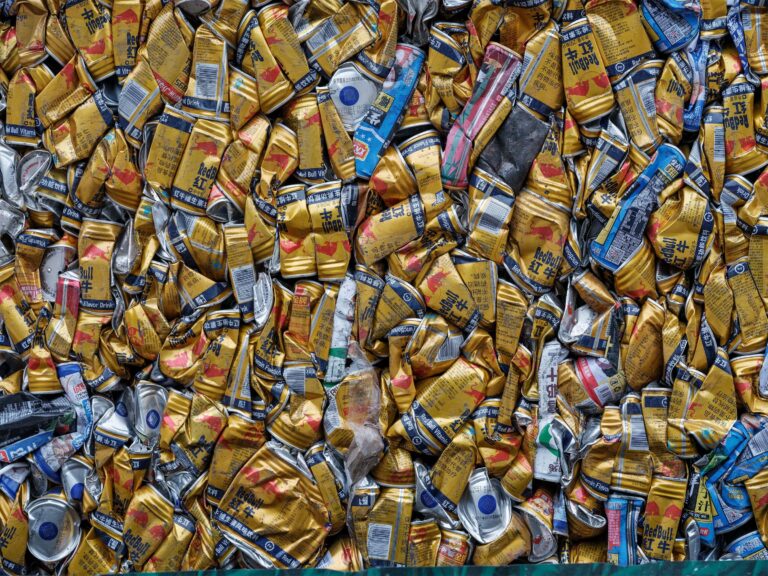
Recycled aluminium comes from manufacturing and post-consumer waste. Manufacturing scrap includes leftover materials, rejected components and production offcuts. Post-consumer scrap includes used drinks cans, vehicle components, window frames and household products.
Recovering these materials reduces the need for newly mined bauxite and supports manufacturers that require aluminium for construction, transport, packaging and industrial applications.
How Much Copper Comes from Recycled Materials?
Copper is essential for electrical wiring, construction, telecommunications, electronic equipment and renewable energy systems. Its conductivity and durability make it valuable across many industries.
The International Copper Association reports that more than 30% of global copper supply has come from recycled sources over the last decade. It also estimates that recycling copper requires 80–90% less energy than producing it from primary sources.
Copper scrap is recovered from electrical cables, plumbing systems, motors, transformers, machinery, and discarded electronic equipment. After collection, the material is sorted and processed to recover copper for manufacturing.
Copper can be recycled repeatedly without losing its essential physical and chemical properties. This makes recovered copper an important resource as demand increases for electrical infrastructure, electric vehicles, and renewable energy equipment.
Why Do Metal Recycling Rates Differ Between Metals?
The percentage of global metal production from recycled materials varies because every metal has different recovery requirements.
One important factor is product lifespan. Metals used in buildings, infrastructure, and industrial machinery can remain in service for decades. These materials are not available for recycling until products are replaced, dismantled or demolished.
Collection systems also influence recovery rates. Steel and aluminium often benefit from established collection networks, while metals contained in small electronic devices and complex machinery can be more difficult to separate.
Processing technology is another consideration. Recycling facilities use shredders, magnetic separators, eddy current systems and specialised sorting equipment to separate valuable materials from mixed waste.
The economic value of a metal also affects recovery. Higher-value materials can justify more complex processing, while recovering metals present in small quantities may be less commercially attractive.
Finally, manufacturers need a consistent supply of suitable scrap. Clean manufacturing offcuts are generally easier to process than contaminated or mixed end-of-life materials.
Which Metals Have Lower Recycled Production Shares?
Although steel, aluminium and copper have established recycling markets, many other metals account for a much smaller proportion of secondary production.
Lithium, cobalt, nickel, tungsten and rare earth elements are used in batteries, electronics, industrial machinery and advanced manufacturing. Recovering these materials can be challenging because they are often combined with several other components.
Lithium-ion batteries, for example, contain valuable materials that can be recovered through specialised recycling processes. However, collection, safe transportation and separation remain important challenges.
The OECD reports that secondary production represents less than 1% of total output for many important metals outside the most widely recycled groups.
Improving recovery technologies and collection systems could help increase the supply of these materials and reduce dependence on newly extracted resources.
How Does Recycled Metal Production Benefit the Environment?
Using metal from recycled materials can reduce the environmental impact of mining and primary metal manufacturing.
Mining requires land, water, energy and industrial infrastructure. Extracting metals from ores also involves processing and refining, which can generate significant greenhouse gas emissions. Recycling helps reduce the need for some of these activities by returning existing materials to manufacturing supply chains.
Energy savings are particularly important for aluminium and copper. Recycling aluminium requires substantially less energy than producing primary aluminium. The International Copper Association estimates that recycled copper production requires 80–90% less energy than primary production.
Steel recycling also provides significant environmental benefits. According to BIR, using approximately 630 million tonnes of recycled steel annually prevents nearly 950 million tonnes of carbon dioxide emissions while conserving natural resources.
However, recycling still requires energy for collection, transportation, sorting, and processing. Its environmental benefits depend on efficient facilities, suitable scrap quality, and the energy sources used.
How Can Global Metal Recycling Increase?
Increasing the proportion of metal production from recycled materials requires improvements throughout the recycling supply chain.
Better collection systems can prevent valuable metals from entering general waste streams. Businesses can also improve recovery by separating production offcuts, machinery components, and other recyclable materials at the source.
Investment in modern recycling facilities can improve sorting accuracy, reduce contamination and recover metals from complex waste streams. Advanced processing technologies can also make previously difficult materials more commercially viable to recycle.
Manufacturers can contribute by designing products that are easier to dismantle, repair and recycle. Improved product design helps recycling facilities recover valuable components when equipment reaches the end of its useful life.
Reliable scrap markets and effective international material management are equally important. They help ensure recovered metals reach manufacturers that can use them as secondary raw materials.
As demand for metals continues across construction, automotive manufacturing, electronics, and renewable energy, recovered materials will remain an important part of global supply chains.
What Is the Future of Recycled Metal Production?
The demand for recycled metals is expected to remain important as industries look for more sustainable ways to obtain raw materials.
Electric vehicles, renewable energy equipment, electronic products, and infrastructure projects require significant quantities of metals. These industries create opportunities to recover and reuse materials from manufacturing waste and products reaching the end of their useful lives.
However, recycled materials alone cannot currently meet all global demand. Many metals remain in use for years before becoming available for recovery. Primary production will therefore continue alongside secondary metal manufacturing.
Improving collection rates, investing in recovery technologies and encouraging manufacturers to use recycled materials can increase the contribution of secondary production over time.
The main challenge is to recover more of the valuable metals already circulating in the global economy.
Approximately 20% of global output for widely recycled metals comes from secondary production, according to the OECD. However, the percentage differs considerably between steel, aluminium, copper and less commonly recycled metals.
Increasing metal recycling can conserve natural resources, reduce energy consumption and support more sustainable manufacturing. Better collection systems, efficient processing facilities and responsible scrap management will be essential to improving global metal recovery.
As industrial demand continues to grow, recycled materials will play an increasingly important role in the future of global metal production.