What Happens to Solar Inverter Circuit Boards?

What happens to solar inverter circuit boards when an inverter reaches the end of its working life?

Solar inverters play an important role in photovoltaic (PV) systems by converting the direct current (DC) electricity produced by a solar panel into alternating current (AC) electricity suitable for buildings and electrical networks. However, these devices contain electronic components that eventually become damaged, outdated or unsuitable for continued use.

Inside the equipment, an inverter board controls electrical functions, monitors performance and manages power conversion. These boards contain valuable metals and materials that can be recovered through specialist recycling. Understanding what happens to solar inverter circuit boards helps businesses manage electronic waste responsibly and reduce the loss of reusable resources.

Solar inverter circuit boards are inspected, removed, sorted and processed at specialist recycling facilities. Their copper and other recoverable materials can be separated for reuse, while unsuitable or hazardous fractions receive appropriate treatment.

What Are Solar Inverter Circuit Boards?

Solar inverter circuit boards are printed circuit boards (PCBs) that control the electrical operation of an inverter. They contain electronic components, conductive pathways, and connections that allow the equipment to convert and regulate electricity.

A typical solar inverter PCB may contain semiconductor devices, resistors, capacitors, transformers, connectors and copper tracks. Some components also contain small quantities of gold, silver, tin and other metals.

The PCB design determines how these components are arranged and connected. Component selection is equally important because each part must operate within the inverter’s electrical and environmental requirements.

For example, a power device helps control the flow of electricity, while the ground plane provides an electrical reference and can support heat distribution. The solder mask protects exposed copper pathways and helps prevent unwanted electrical contact during operation.

Different inverter models have different circuit board structures. Therefore, the material content and recovery potential can vary between manufacturers and equipment types.

Why Are Inverter Circuit Boards Important?

Inverter circuit boards are essential because they manage the conversion of DC power into AC power. Electricity enters the equipment through the DC input, where electronic components regulate its flow before conversion.

The inverter then produces an AC output that can supply electrical appliances or connect to the electricity network. High-frequency switching is used in many inverter designs to control power conversion efficiently.

These operations generate heat, making thermal management an important part of circuit board design. Materials with suitable thermal conductivity help transfer heat away from sensitive components and reduce the risk of overheating.

However, continuous operation exposes inverter circuit boards to changing temperatures and environmental conditions. Thermal cycling, electrical stress, moisture and dust can gradually affect connections and electronic components.

Eventually, faults may develop, requiring repairs or replacement of the complete inverter. When the equipment cannot be reused, its circuit boards should enter an appropriate electronic waste recycling process.

What Happens to Solar Inverter Circuit Boards During Recycling?

The recycling process involves several stages to separate useful materials and manage unsuitable components safely.

1. Collection and Initial Inspection

The process begins when damaged, unwanted or end-of-life inverters are collected from solar installations, businesses, maintenance contractors or electrical equipment suppliers.

The equipment is transported to an appropriate treatment facility for inspection. Trained personnel assess its condition, identify the inverter model and determine whether the equipment can be repaired, reused or recycled.

This assessment is important because not every faulty inverter needs to be treated as waste immediately. Some equipment may remain suitable for repair or component replacement.

Where recycling is necessary, the inverter is directed towards an appropriate treatment process.

2. Safe Dismantling of the Inverter

Before dismantling, the equipment must be disconnected and made safe by following suitable electrical safety procedures. Some components can retain stored electrical energy even after the inverter has been disconnected.

Technicians remove the outer casing and identify the internal components. These may include cooling fans, transformers, cables, heat sinks, capacitors and inverter circuit boards.

The circuit boards are separated from other materials to make further processing easier. Components that require separate treatment are also identified during this stage.

3. Sorting and Separation of Inverter PCBs

Once removed, inverter PCBs are sorted according to their construction, condition, and material composition.

Different inverter circuit boards can contain different combinations of metals, plastics, electronic components, and protective coatings. Sorting helps recycling facilities identify suitable processing methods for each material group.

Some boards may require additional dismantling to remove attached components. Others can be sent directly for specialist mechanical processing.

Separating circuit boards from cables, aluminium casings and other inverter parts also helps reduce contamination and improve the quality of recovered materials.

4. Mechanical Processing

Suitable circuit boards may undergo controlled mechanical processing to reduce their size and separate different material fractions.

Depending on the facility, this can involve shredding, crushing, screening and physical separation. These processes help divide the boards into metal-rich and non-metal fractions.

Specialist equipment can concentrate materials such as copper for further recovery. The precise process depends on the board’s construction and the technology available at the treatment facility.

Mechanical processing must be properly controlled to prevent dust, contamination, and unnecessary material losses.

5. Recovery of Valuable Metals

One of the main benefits of inverter board recycling is the recovery of valuable metals.

Copper is commonly present in conductive tracks, electrical connections, and other components. It can be recovered and refined for use in new electrical products, wiring and industrial applications.

Gold and silver may also be found in small quantities in selected contacts and electronic connections. Tin, nickel, aluminium and iron may be recovered from suitable components or associated equipment.

The amount of each material depends on the board’s design, age and component selection. Not every solar inverter circuit contains the same metals or quantities.

Specialist recycling processes separate and refine suitable metal fractions so they can become secondary raw materials for manufacturing.

6. Treatment of Remaining Materials

Not every part of an inverter circuit board can be recovered for reuse. Some plastic, resin and contaminated fractions require additional treatment.

The Environment Agency identifies printed circuit boards as components that may contain hazardous substances and persistent organic pollutants (POPs). Its guidance expects industrial and commercial printed circuit boards to be classified under hazardous and POPs waste code 16 02 15*.

This classification makes appropriate assessment, handling, and treatment essential. Businesses should use competent waste management providers and follow the applicable waste classification requirements.

What Materials Can Be Recovered From Inverter Circuit Boards?

The materials available for recovery depend on the construction of the board and the electronic components used.

Copper is one of the most common recoverable materials because it provides electrical conductivity throughout the circuit. Gold and silver may be present in selected contacts, although their quantities are generally much smaller.

Aluminium, iron, nickel and tin may also be recovered where they are present in suitable components. These metals can enter further processing and manufacturing supply chains.

Plastic and resin materials are more difficult to recycle because circuit boards contain complex mixtures of materials. Their recovery depends on the available technology and whether the resulting material meets suitable quality requirements.

Statistics: Why Solar Inverter Recycling Matters

The growth of solar energy increases the importance of planning for the eventual replacement and recycling of electrical equipment.

According to the IEA Photovoltaic Power Systems Programme, global cumulative installed solar PV capacity reached approximately 2.96 terawatts by the end of 2025. Around 690 gigawatts of new capacity were installed during that year.

This expansion demonstrates the scale of the solar industry and the growing number of electrical components used in installations worldwide. However, installed capacity does not represent waste generated. Solar inverters have different replacement cycles from solar panels, so their end-of-life volumes should be assessed separately.

The UK’s electronic waste figures also highlight the need for effective recycling. Material Focus reported that WEEE collections reached 496,000 tonnes in 2024, the highest level in five years. This represented a 0.6% increase compared with 2018.

Although these figures cover electrical waste generally rather than inverter circuit boards specifically, they demonstrate the importance of maintaining effective collection and recovery systems.

How Can Businesses Manage Old Solar Inverter Circuit Boards?

Businesses can improve waste management by identifying damaged and redundant inverters before they accumulate in storage areas.

Keeping electrical equipment separate from general waste makes collection and treatment arrangements easier. Businesses should also maintain appropriate records of waste descriptions, classifications, transfers and treatment routes.

Working with an authorised and suitably qualified recycling provider helps ensure that inverter circuit boards are handled correctly. Providers should be able to explain their collection arrangements and how different materials are processed.

Businesses should not dismantle circuit boards without appropriate training, equipment and safety procedures. Electrical components may retain stored energy, while certain materials require specialist handling.

Where equipment remains functional, repair and reuse should also be considered before recycling.

The Future of Solar Inverter Circuit Board Recycling

As solar installations expand, more attention will be needed on the management of electrical components throughout their working lives.

Improvements in PCB design could make future equipment easier to repair, dismantle, and recycle. Better component identification and separation technologies may also help facilities recover more useful materials from complex inverter PCBs.

Manufacturers can support these improvements by considering material choices, thermal management, repairability and end-of-life treatment during product development.

Businesses can contribute by arranging suitable collections and selecting responsible recycling routes. These actions help keep recoverable resources in circulation and reduce unnecessary electronic waste.

Solar inverter circuit boards contain electronic components and materials that should be managed responsibly when equipment reaches the end of its working life. Through inspection, dismantling, sorting, and specialist processing, copper and other recoverable metals can be separated for further use.

Proper treatment also helps manage hazardous substances and unsuitable materials. For businesses operating solar installations, responsible inverter recycling supports better waste management and more efficient use of valuable resources.

Solar Inverter Waste Management for UK Businesses

Solar inverter waste management is now an important part of responsible solar energy work for UK businesses. As more commercial buildings install solar panels, companies need a plan for inverters that are damaged, out of date, or at the end of their working life. Good handling helps firms meet waste duties, recover usable materials, and cut unnecessary electronic waste.

Solar inverters contain recyclable metals and electronic parts. Businesses should check reuse options, follow WEEE rules, and use approved waste firms for safe collection and recycling.

Why Solar Inverter Waste Management Matters

A solar inverter changes the direct current (DC) electricity from solar panels into alternating current (AC) for buildings and electrical systems. It also tracks system performance and helps keep energy output efficient.

But inverters do not last forever. Faults, damaged parts, new technology, and normal wear can make replacement needed. Some businesses also replace working units when they upgrade their solar panels.

As a result, firms need a clear way to deal with unwanted equipment. Putting old inverters in general waste can waste valuable materials and create environmental and legal risk.

The UK solar market is still growing. The Department for Energy Security and Net Zero says 269,000 solar installations were completed across the UK in 2025, a 37% rise from the year before. The International Energy Agency’s PV Power Systems Programme also reported 21.6 GW of installed UK solar capacity by December 2025.

These figures show why planning for equipment replacement and end-of-life management matters.

What Happens to Old Solar Inverters?

When a solar inverter is removed, businesses should first check whether it can be repaired or reused. If it still works, it may have value if it is tested, safe, and fit for another use.

If reuse is not possible, the inverter should go into a proper WEEE recycling route. Specialist facilities can take it apart and separate the parts for treatment.

Solar inverters contain several materials, including aluminium, copper, steel, plastics, and circuit boards. These parts need different recycling processes because they are made from different materials and need different recovery steps.

Metal casings and wiring may provide usable materials, while circuit boards need specialist processing. Careful separation helps recover valuable materials and cuts the amount of electrical waste sent for final disposal.

Solar Inverter Waste Management and UK WEEE Regulations

Businesses must know their duties when they dispose of commercial electrical equipment. The Waste Electrical and Electronic Equipment Regulations set the rules for collecting, treating, recovering, and recycling relevant products.

The waste duty of care also says businesses must take reasonable steps to stop illegal disposal and make sure waste goes to approved organisations.

Before collection, businesses should identify the waste correctly and decide whether it is hazardous. That depends on the equipment’s makeup and whether it contains substances that may pose environmental or health risks.

Waste transfers must also have the right paperwork. Non-hazardous waste usually needs a waste transfer note, while hazardous waste needs the proper consignment document.

Businesses should check the rules that apply in their area, since waste law and admin steps can differ between England, Wales, Scotland, and Northern Ireland.

Official guidance is available through the UK WEEE regulations and the waste duty of care code.

How Businesses Can Prepare Solar Inverters for Recycling

Good preparation makes electrical waste collections safer and more efficient. Businesses should keep records of removed equipment, including the maker, model, serial number, and condition.

Only trained staff should isolate and disconnect inverters. Electrical equipment must be handled under maker instructions and site safety rules. Damaged units should not be opened or stripped by untrained staff.

After removal, equipment should be stored securely in a dry place. Businesses should protect inverters from rain, damage, and unapproved access while they wait for collection.

It is also important to separate reusable items from waste. If a solar install includes battery storage, batteries should be checked and managed apart under the right waste rules.

These steps help recycling providers identify equipment and choose the best treatment route.

Choosing a Solar Inverter Recycling Provider

Selecting a suitable recycling provider is an important part of commercial waste management. Businesses should check whether the provider has the right waste carrier registration and whether the receiving site has the proper environmental approval.

A reliable provider should explain how equipment is collected, moved, processed, and recorded. Businesses should also ask whether parts are checked for reuse and how recyclable materials are recovered.

Clear records help firms show that their electrical waste went through the right treatment route. They also support internal environmental reports and responsible resource use.

Companies with larger PV installations may benefit from linking inverter collections with wider solar panel recycling work. This can help them manage different solar waste streams without mixing items that need separate treatment.

The Future of Solar Waste Management in the UK

The UK’s growing solar industry will create more demand for effective end-of-life management. A 2025 study in Energy Strategy Reviews estimated that the total number of end-of-life UK PV modules could pass 100 million units, or about two million tonnes, by 2050.

This forecast refers to solar modules rather than inverters, but it shows the wider waste challenge facing the solar industry.

As more systems reach replacement age, businesses will need reliable collection, sorting, and recycling processes. Better recovery systems can keep useful materials in supply chains and reduce the need for newly mined resources.

Planning equipment replacement and waste management together can also help organisations control storage needs, improve operating efficiency, and support sustainability goals.

Solar Inverter Waste Management for UK Businesses should be part of commercial solar maintenance and replacement plans. By checking reuse options, following WEEE rules, and working with approved recycling providers, organisations can manage unwanted equipment responsibly.

Recovering metals and other useful parts also supports resource efficiency and reduces the environmental impact of electrical waste.

Zinc Scrap From Construction and Manufacturing

Zinc scrap comes from construction, fabrication, and manufacturing. Good sorting helps businesses recover metal and cut waste.

Where Zinc Scrap from Construction and Manufacturing Comes From

Zinc scrap from construction and manufacturing is made when metal products are produced, installed, repaired, or replaced. It includes unused stock, damaged parts, and metal removed during building work, renovation, and demolition.

Zinc is used widely because it protects steel from rust and adds longevity in industry.

  • Construction projects use zinc in roofing, wall cladding, gutters, flashing, drainage systems, and building parts.
  • When these products are replaced or removed, they become a source of recyclable metal.

Manufacturing sites also make zinc waste through cutting, shaping, casting, and fabrication.

  • Common examples include sheet offcuts, rejected parts, metal trimmings, and production residue.
  • Sorting these materials during production makes recovery easier and cuts the amount sent to general waste.

The International Lead and Zinc Study Group’s World Zinc Factbook 2024 says galvanising makes up about 60% of global first-use zinc. Construction makes up about 50% of zinc’s end-use market. These figures show how important construction and industry are to the zinc supply chain.

Common Sources of Zinc Scrap in Construction

Construction and demolition work creates many types of zinc-bearing material.

  • Roofing sheets, rainwater systems, window fittings, wall panels, and building parts can contain zinc or zinc alloys.

Galvanised steel is another key source. It has a zinc coating that helps stop rust and extend the life of steel products.

  • When old fencing, support structures, pipes, and metal frames are removed, the material can go into metal recycling.

However, galvanised steel is not the same as solid zinc scrap. Its main material is steel, while zinc is only a surface coat. This changes how the materials are sorted and processed.

Construction teams can improve recovery by spotting metal waste before demolition starts. Keeping zinc sheets, galvanised steel, and mixed metals separate helps keep scrap clean and supports more efficient recycling.

Zinc Scrap From Manufacturing and Industrial Production

Zinc scrap from manufacturing comes from many production steps, including metal casting, engineering, fabrication, and part making.

Zinc die-casting matters because zinc alloys are used to make detailed parts for electrical gear, car parts, machinery, and household fittings.

  • Manufacturing can create rejected castings, runners, sprues, and unused material that may be suitable for recovery.

Other industrial work produces zinc sheet offcuts, machining residue, and galvanised steel waste. Sorting these materials at the production stage helps businesses keep cleaner scrap streams and improve recycling.

The amount and quality of zinc scrap depend on the process, product design, and material spec. Keeping production waste separate from general waste makes collection and recycling easier.

How Zinc Scrap Is Sorted and Prepared for Recycling

Proper sorting is a key part of zinc recycling. Different zinc-bearing materials have different makeup, so they cannot always use the same recovery method.

Businesses should separate clean zinc sheets, zinc alloys, galvanised steel, and mixed metal parts where possible. Clear labels help stop workers from mixing recyclable material with general industrial waste.

Paint, plastic, rubber, insulation, oils, and other residue can reduce recovery quality. These materials may need to be removed or handled separately. Metal should be stored safely to avoid extra damage.

For larger amounts, specialist recyclers can assess the material before collection. Details about the original product, the process used, and possible alloy makeup help choose the best recycling route.

What Happens to Zinc Scrap After Collection?

Once collected, zinc scrap is checked, sorted, and prepared for processing. Depending on condition, the material may be separated, graded, size-reduced, or sent straight to the right recycling plant.

Clean zinc scrap and suitable zinc alloys can be melted and refined for use in new industrial products. Recovered zinc can become galvanised steel, die-cast parts, and other manufactured goods.

Galvanised steel follows a different route. The steel can be recycled, while the zinc coat may go through specialist recovery. One example is electric arc furnace dust, which can hold concentrated zinc.

The International Zinc Association says that 95% of electric arc furnace dust is recycled in North America and Europe. This shows how specialist plants can recover zinc from industrial residue that would otherwise need more treatment.

Zinc Recycling Statistics and Environmental Benefits

Zinc recycling helps save resources by returning recovered metal to industrial supply chains. Zinc can be recycled many times without losing its key chemical and physical properties.

  • The International Zinc Association reports a global end-of-life zinc recycling rate of about 34%.
  • It also estimates that 60% of all zinc ever made remains in use in buildings, infrastructure, machinery, and other products.
  • For rolled zinc products, the reported recycling rate is 95%.
  • This is especially important for construction, since rolled zinc is common in roofing and building work.

These figures show why it is important to collect and recover zinc-bearing material. Still, recycling rates vary by product, collection system, and available processing plants.

Recovering zinc scrap also helps businesses cut disposal needs and use existing resources better. Using secondary materials can support more efficient manufacturing and reduce reliance on newly mined raw materials.

How Businesses Can Improve Zinc Scrap Recovery

Businesses can improve metal recovery by finding where zinc waste is created across their operations. Construction firms should include metal separation in demolition and refurbishment plans, while manufacturers can review production steps to find reusable offcuts and rejected parts.

Clear storage setups help stop different metals from mixing. Staff should know which material goes in each container and how to handle industrial residue safely.

Businesses should also keep accurate waste records and use approved waste carriers. In England, businesses must follow waste duty of care rules when storing and moving controlled waste.

Working with an experienced metal recycling specialist can help companies assess scrap, arrange collections, and choose the right recovery route. Businesses can also explore zinc recycling to learn how recyclable zinc material can be recovered and returned to use.

Zinc scrap from construction and manufacturing is an important source of recyclable metal. Roofing material, galvanised steel, manufacturing offcuts, and zinc alloy parts can all support metal recovery when they are identified and separated correctly.

By improving waste sorting, using proper storage, and working with specialist recycling plants, businesses can recover valuable material, cut avoidable disposal, and support a more circular industrial supply chain.

Tungsten Scrap and Critical Material Recovery

Tungsten scrap recovery helps manufacturers save valuable materials. It also cuts dependence on mining and supports a more sustainable supply chain.

Tungsten scrap and critical material recovery are becoming more important as industries look for steady supplies of valuable metals. Tungsten is used in manufacturing, engineering, aerospace, mining, and construction because it is hard, dense, and heat resistant. But making new tungsten needs mining and energy-heavy processing.

Recovering tungsten from industrial waste gives another source of material. It lets manufacturers reuse valuable resources and reduce the amount of scrap sent for disposal. Businesses that produce tungsten waste can help by spotting recyclable materials and setting up the right recovery route.

Why Tungsten Is an Important Critical Material

Tungsten is an important industrial metal because it works well in demanding conditions. Its high melting point, strength, and hardness make it useful where other metals wear out or lose performance.

One common use is tungsten carbide. It is used to make cutting tools, drill bits, milling inserts, and wear-resistant machine parts. These products are important in engineering, metalworking, mining, and construction.

Tungsten is also used in special alloys, electrical parts, heating elements, and aerospace equipment. It matters because its properties are hard to replace in some jobs.

A concentrated supply chain is another risk. The British Geological Survey said global tungsten output fell 8% in 2024 from 2023. This shows why recycling and recovery matter.

Tungsten Scrap and Critical Material Recovery Statistics

Industry data show how much recycled tungsten can support supply chains.

  • According to the International Tungsten Industry Association (ITIA), a global material flow study for 2016 found 37,500 tonnes of recycled tungsten going into production from a total input of 108,500 tonnes. That was a recycling input rate of about 35%.
  • The same study estimated 29,000 tonnes of old scrap from end-of-life products. The estimated end-of-life recycling rate was 30%.
  • A 2026 European Court of Auditors report says the EU recycling rate for tungsten is about 42%, using European Commission material data.

Even though these numbers cover different periods and methods, they show that recovered tungsten already supports industrial supply. Better collection, sorting, and processing can raise the amount of secondary material available.

Common Sources of Tungsten Scrap in Manufacturing

Tungsten scrap comes from many manufacturing and industrial jobs. Machining is a major source because tungsten carbide products are often used to shape metal parts.

Worn cutting tools, drill bits, milling cutters, and turning inserts may still hold usable tungsten even after they are no longer fit for use. Their job may be over, but the material can still have value.

Manufacturing also creates tungsten offcuts, rejected parts, and production waste. Aerospace and engineering firms may generate tungsten alloy waste from special equipment and precision parts.

Other sources include used electrodes, tungsten rods, bars, and spare industrial parts. Finding these materials helps businesses sort valuable scrap from general metal waste and improve recovery.

How Tungsten Scrap Is Recovered and Recycled

The tungsten recycling process starts with collection, identification, and sorting. Recyclers check the material to learn its makeup, condition, and tungsten content.

Sorting matters because tungsten carbide, pure tungsten, and tungsten-containing alloys may need different methods. If these materials are mixed with other metals, recovery becomes harder.

Once sorted, suitable scrap goes to specialist recycling plants. Two common recovery methods are zinc processing and chemical processing.

  • The zinc process is often used for suitable cemented tungsten carbide scrap. It separates the cobalt binder from the carbide structure so the material can be made into reusable tungsten carbide powder.
  • Chemical processing uses controlled treatment to recover tungsten from suitable scrap. The recovered material can be cleaned and turned into base compounds before it is made into tungsten powder.

The best method depends on the scrap type and condition. Both methods help return valuable tungsten to manufacturing supply chains.

Benefits of Critical Material Recovery for Businesses

Recovering tungsten gives businesses several benefits.

  • Resource savings are a major benefit. Reusing existing material cuts the need to rely only on newly mined tungsten.
  • Recovery also supports better resource use. Mining and refining take large industrial effort, while recycled material gives an extra supply source.
  • There can also be financial gains. High-grade tungsten carbide scrap, used cutting tools, and clean manufacturing offcuts may still have material value after use. Keeping these materials apart from general waste can improve recovery.
  • Another benefit is support for the circular economy. Instead of treating valuable metals as waste, businesses can send them back into production through the right recycling route.

How Businesses Can Improve Tungsten Scrap Recovery

Businesses can improve recovery by using clear waste sorting steps. Tungsten carbide cutting tools and other tungsten-containing materials should stay separate from unrelated metals when possible.

Clearly labelled storage bins can help stop valuable scrap from mixing with general manufacturing waste. Staff should also know which materials contain tungsten and how to handle them.

Tracking the amount and type of scrap produced can help businesses find ways to improve collection. Regular reviews of waste streams can also show where material is being lost.

Working with a specialist metal recycling provider can make the process easier. Professional collection and material checks help businesses manage industrial scrap and find the best recovery route.

Businesses can also explore tungsten recycling to learn how recovered materials can support responsible resource use.

The Future of Tungsten Scrap and Critical Material Recovery

Demand for reliable industrial materials makes tungsten recovery more important in modern manufacturing. As businesses focus on supply chain strength, resource savings, and responsible production, recycled tungsten can provide a useful secondary supply.

Better collection systems, sorting methods, and recycling technology may help increase the amount of tungsten recovered from industrial waste.

Manufacturers have an important role in this progress. By spotting recyclable materials, separating tungsten scrap, and arranging responsible collections, businesses can help keep valuable resources in use.

Tungsten scrap is more than unwanted manufacturing waste. It is a recoverable resource that can support industrial production, save raw materials, and help build a more circular economy.

Titanium Waste From Medical and Industrial Applications

Titanium waste comes from medical devices, aerospace manufacturing, and industrial equipment. Recovering suitable scrap helps conserve resources, reduce waste, and support sustainable manufacturing.

What Is Titanium Waste?

Titanium waste includes unwanted metal components, offcuts, machining residues, and products that have reached the end of their useful life.

Titanium is widely used because it combines strength, low weight, and excellent corrosion resistance. These properties make it suitable for demanding medical and industrial applications where durability and reliability are essential.

However, manufacturing titanium products can generate significant amounts of scrap. Recovering this material helps businesses reduce waste, conserve raw materials, and improve resource efficiency.

Titanium waste generally falls into two categories: manufacturing scrap and end-of-life material. Manufacturing scrap includes clean offcuts, machining chips, and rejected components. End-of-life waste includes discarded equipment, medical implants, and industrial parts.

Common Sources of Titanium Waste from Medical and Industrial Applications

Medical Applications

Titanium is widely used in healthcare because of its strength, corrosion resistance, and biocompatibility.

Common sources of medical titanium waste include orthopaedic implants, dental implants, surgical plates, screws, fixation devices and titanium surgical instruments.

Manufacturing medical devices can produce clean titanium scrap through machining, cutting and component finishing. However, implants removed after medical procedures require careful assessment because they may contain biological residues or other contaminants.

Titanium medical devices can therefore provide valuable recyclable material, provided that suitable handling and processing procedures are followed.

Industrial Applications

Industrial titanium waste is generated across several manufacturing sectors.

Aerospace manufacturers produce titanium scrap when machining aircraft components, engine parts and structural assemblies. Chemical processing facilities generate waste from titanium equipment, pipes, valves and corrosion-resistant components.

Other sources include marine engineering, automotive manufacturing, power generation and precision engineering.

Businesses may also generate titanium waste through maintenance, equipment replacement and the production of specialised metal components.

Why Titanium Waste Recovery Matters

Recovering titanium waste offers environmental and economic benefits.

Titanium production involves several energy-intensive processing stages. Recycling suitable scrap can reduce the demand for primary material production and help conserve natural resources.

The metal’s value also makes recovery attractive for businesses that generate consistent quantities of clean titanium scrap.

Rather than treating usable titanium as general waste, manufacturers can separate and recover it for appropriate recycling routes. This can improve resource efficiency, reduce disposal requirements, and support circular manufacturing.

Titanium Recycling Statistics and Industry Trends

Titanium recycling statistics demonstrate why material recovery deserves greater attention.

Titanium Recycling Statistics and Industry Trends

Titanium recycling statistics demonstrate why material recovery deserves greater attention.

Statistic

Reported figure

Global primary titanium production

13,870 thousand tonnes in 2022

Annual recycled share of global titanium supply

Approximately 30%

Global end-of-life recycling rate

Less than 1%

Aerospace titanium recycling rate

Approximately 80%

Sources: European Commission Joint Research Centre, Material Insights and British Geological Survey-derived estimates.

These figures highlight an important distinction. Titanium recycling is well established for manufacturing scrap, but recovering metal from products that have reached the end of their useful life remains more challenging.

The European Commission’s titanium raw materials profile provides information on titanium production and recycling indicators.

The Material Insights titanium profile also explains how scrap quality, contamination and application affect recovery.

Statistics refer to different reporting years and measurement methods. They should not be treated as directly comparable recycling rates.

How Titanium Waste Is Recovered and Recycled

Collection and Identification

Titanium waste is collected from manufacturing facilities, medical equipment producers, and industrial operations.

Identifying the titanium grade is important because different alloys have different compositions and recycling requirements. Businesses should retain material records where available.

Sorting and Segregation

Titanium scrap is separated from other metals, plastics, and general waste.

Clean titanium offcuts should be kept separate from mixed or contaminated material. This improves the potential for high-quality recovery and reduces processing difficulties.

Contamination Removal

Scrap may require cleaning to remove oils, coatings, residues, and other unwanted materials.

Medical titanium components require particular attention because their previous use may introduce biological contamination. They should only enter an appropriate recovery process after suitable assessment and treatment.

Processing and Remelting

Suitable titanium scrap can be processed, melted and refined to produce material for further manufacturing.

Some recovered titanium may return to applications requiring similar material quality. Other scrap may be used in lower-specification products, depending on its composition and purity.

Reuse in Manufacturing

Recovered titanium can become feedstock for new metal products, engineering components, and industrial applications.

The final destination depends on the scrap’s grade, condition, and processing requirements.

Challenges in Medical and Industrial Titanium Recycling

Titanium recycling requires more than simply collecting metal waste.

Contamination can reduce the quality and value of recovered material. Medical residues, cutting fluids, coatings, and mixed metals may require additional treatment.

Alloy identification is another challenge. Titanium components can contain different alloying elements, making accurate sorting essential.

Specialist processing can also increase recovery costs. Some titanium scrap requires controlled melting and refining to meet demanding industrial specifications.

Finally, end-of-life recovery is limited by the long service life of many titanium products. Medical implants and aerospace components may remain in use for decades before becoming available for recycling.

How Businesses Can Reduce Titanium Waste

Businesses can improve titanium waste management by identifying where scrap is generated and separating it at source.

Manufacturers should keep titanium offcuts and machining residues in dedicated containers. Clear labelling and material records can help prevent contamination and improve recycling outcomes.

Reviewing manufacturing processes may also reduce unnecessary material loss. More efficient machining, improved cutting plans and careful inventory management can help businesses minimise scrap generation.

Working with a suitable titanium recycling service can help businesses identify appropriate collection, sorting and recycling routes for different titanium grades.

UK Regulations and Responsible Titanium Waste Management

Businesses handling titanium waste must assess how the material is classified and managed under applicable waste regulations.

Medical titanium waste may require additional controls depending on its contamination and previous use. Industrial titanium scrap should also be assessed to determine whether it contains hazardous substances or requires specialist handling.

In England, businesses should consult the Environment Agency’s healthcare waste guidance when managing relevant healthcare waste.

The GOV.UK waste management guidance provides further information on responsible waste handling and disposal.

Requirements may differ across England, Scotland, Wales and Northern Ireland, so businesses should check the regulations applicable to their location.

The Future of Titanium Waste Recovery

As demand for durable, lightweight and corrosion-resistant materials continues across medical and industrial sectors, titanium recovery will remain an important part of resource management.

Improved sorting, advanced recycling technologies and more efficient manufacturing processes could help recover additional titanium from complex waste streams.

For businesses, separating titanium scrap and establishing suitable recovery routes can support material efficiency, reduce waste and contribute to a more circular industrial economy.

Titanium waste from medical and industrial applications represents a valuable secondary resource. From surgical implants and medical devices to aerospace components and engineering offcuts, suitable titanium scrap can be recovered and returned to manufacturing.

Although contamination, alloy identification, and specialist processing present challenges, responsible collection and recycling can help businesses conserve resources and reduce unnecessary waste.

Nickel Waste From Stainless Steel Production

Nickel waste from stainless steel production includes offcuts, machining swarf, and manufacturing residues. Recovering these materials helps businesses reduce waste, retain metal value, and support sustainable manufacturing.

Nickel waste from stainless steel production is a valuable resource for manufacturers seeking to improve material efficiency and reduce industrial waste. Stainless steel contains nickel alongside other alloying elements, making production residues suitable for recovery when they are collected and processed correctly.

During stainless steel production, materials can be lost through cutting, machining, grinding and finishing. Although these residues may no longer be suitable for their original purpose, they can still contain recoverable nickel and other valuable metals.

Rather than sending these materials for disposal, businesses can recover them through appropriate recycling processes. This helps reduce the demand for primary raw materials, improve resource efficiency and support a more sustainable stainless steel supply chain.

Understanding where nickel waste comes from and how it can be recovered allows manufacturers to make better decisions about industrial metal recycling.

What Causes Nickel Waste in Stainless Steel Production?

Stainless steel production involves several processes that transform raw materials into finished products. Each stage can generate residues containing nickel, chromium, and iron.

The quantity and composition of waste depend on the stainless steel grade, manufacturing method, equipment, and production requirements.

Cutting and Fabrication Offcuts

Cutting stainless steel sheets, plates, pipes and bars produces offcuts and leftover sections. These materials may be too small or unsuitable for the intended product but can still contain valuable nickel.

Common examples include stainless steel sheet offcuts, unused plate sections, pipe remnants and rejected fabrication pieces.

When these materials are collected separately, they can often be returned to metal recycling facilities for processing. Keeping offcuts free from unrelated materials also helps maintain their recycling value.

Machining Swarf and Turnings

Machining operations remove material from stainless steel components to achieve the required dimensions and surface finish. Processes such as turning, milling and drilling generate swarf, chips and metal turnings.

These residues can contain nickel alongside chromium and iron. However, machining waste may also contain cutting fluids, lubricants and moisture.

Proper handling is important because contamination can affect the quality and suitability of the material for recycling. Separating different waste streams can also make collection and processing more efficient.

Grinding and Finishing Residues

Grinding, polishing, and surface finishing can generate fine metal particles, dust, and residues.

These materials may contain recoverable metals, but their physical form makes collection and processing more complex than recycling larger stainless steel pieces.

Businesses should assess these waste streams separately and use suitable recovery methods rather than mixing them with general industrial waste.

Which Types of Nickel Waste Can Be Recycled?

Not all stainless steel waste has the same composition or recycling value. Nickel content depends on the stainless steel grade and the manufacturing process. Nickel content depends on the stainless steel grade ss.

Common nickel-bearing waste streams include stainless steel offcuts, machining swarf, metal turnings, rejected components, grinding residues, and general stainless steel scrap.

Austenitic stainless steel grades, such as 304 and 316, commonly contain nickel. Grade 316 also contains molybdenum, which can contribute additional material value.

Identifying the stainless steel grade helps recycling facilities determine the appropriate recovery route. Material identification is particularly important when different alloys are generated during the same production process.

How Is Nickel Waste From Stainless Steel Production Recovered?

Nickel recovery generally involves collecting, preparing and processing nickel-bearing materials so they can return to manufacturing supply chains.

The exact process depends on the composition, condition and physical form of the waste.

Collection and Segregation

The first step is collecting stainless steel residues and separating them from unrelated materials.

Businesses should avoid mixing different stainless steel grades where practical. Separating nickel-bearing stainless steel from carbon steel, aluminium and other metals helps maintain material quality.

Segregation also makes it easier for recycling facilities to identify the composition of incoming scrap and determine the most suitable processing method.

Sorting and Material Identification

Recycling facilities may use visual inspection, material records and metal analysis to identify stainless steel grades.

Portable X-ray fluorescence analysers can help identify alloy composition, including nickel and chromium content.

Accurate identification supports better material classification and helps prevent valuable alloy grades from being downgraded through incorrect mixing.

Preparation and Processing

Depending on the material, preparation may involve cutting, shredding, compacting or removing contaminants.

Machining swarf may require additional treatment to remove excess fluids or improve handling. Fine residues may need specialised processing because their physical characteristics differ from larger scrap pieces.

The aim is to prepare the material for an appropriate recycling route while maintaining its recoverable metal content.

Remelting and Alloy Recovery

Prepared stainless steel scrap can be used as a secondary raw material in stainless steel production.

During remelting, the recovered material is combined with other suitable feedstocks. Manufacturers manage the alloy composition to achieve the required stainless steel grade.

This allows nickel and other alloying elements to return to the production cycle rather than being lost through disposal.

Nickel Waste From Stainless Steel Production: Statistics and Industry Trends

Nickel waste recovery is closely connected to global stainless steel production. Industry statistics show the scale of stainless steel manufacturing and the importance of recycling nickel-bearing materials.

Global stainless steel production

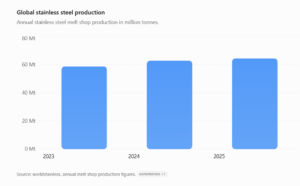
1. Global Stainless Steel Production Reached 64.2 Million Tonnes in 2025

According to worldstainless, global stainless steel melt shop production reached 64.2 million tonnes in 2025, an increase of 2.1% compared with 2024.

Production increased from 58.5 million tonnes in 2023 to 62.6 million tonnes in 2024, demonstrating the scale of the global stainless steel industry.,

Higher production means more stainless steel materials pass through manufacturing processes. Cutting, machining and finishing can generate nickel-bearing residues, making effective waste collection and recovery important for manufacturers.

2. Stainless Steel Accounts for a Major Share of Nickel Demand

A 2025 market presentation from Eramet estimates that stainless steel accounted for approximately 2.25 million tonnes of global primary nickel demand in 2025, excluding scrap.

The figure represented around 65% of the reported 3.46 million tonnes of primary nickel demand that year.

This demonstrates why nickel recovery from stainless steel production waste matters. Recovering suitable nickel-bearing scrap can help supplement primary nickel supplies and support more efficient use of alloying materials.

3. Nickel-Bearing Scrap Supplies Significant Recycled Material

The International Nickel Study Group estimates that approximately 4.4–4.6 million tonnes of nickel-bearing scrap are collected and recycled annually, containing almost 350,000 tonnes of nickel.

The organisation notes that much of this material is used by the stainless steel industry.

These figures highlight the established role of nickel-bearing scrap in industrial metal recovery. Stainless steel production waste can contribute to this recycling stream when manufacturers separate and manage residues appropriately.

4. At Least 95% of Stainless Steel Is Recycled at End of Life

According to worldstainless, at least 95% of stainless steel is recycled at the end of its useful life. Stainless steel is also described as 100% recyclable.

This statistic relates to end-of-life stainless steel rather than manufacturing waste specifically. However, it demonstrates the material’s established recycling potential and reinforces the value of recovering production residues before they enter disposal streams.

What These Statistics Mean for Manufacturers

These statistics show that stainless steel production and nickel recovery are closely linked. As manufacturing activity increases, businesses have opportunities to improve the collection and recovery of nickel-bearing residues.

However, global stainless steel production figures should not be treated as direct measurements of nickel waste. The quantity of waste generated depends on the manufacturing process, material grade, production efficiency and scrap management practices.

For individual manufacturers, tracking the quantity of stainless steel offcuts, swarf and rejected components generated each month provides a more accurate picture of their nickel waste recovery opportunities.

Why Nickel Waste Recovery Matters for Manufacturers

Recovering nickel waste from stainless steel production offers several operational and environmental advantages.

Reducing Raw Material Demand

Nickel is an important alloying element in many stainless steel grades. Recovering nickel-bearing scrap reduces the need to rely entirely on newly extracted materials.

Secondary raw materials can support more efficient use of existing metal resources and help manufacturers manage exposure to raw material supply fluctuations.

Improving Manufacturing Efficiency

Production waste represents material that has already passed through purchasing, handling and manufacturing operations.

Recovering suitable residues allows businesses to retain value from materials that would otherwise be discarded. Effective scrap management can also improve inventory control and reduce unnecessary waste handling.

Supporting Resource Conservation

Nickel extraction and primary metal production require energy, equipment and natural resources.

Recycling suitable nickel-bearing stainless steel waste helps keep metals in circulation and reduces the need for additional primary production.

The environmental benefits depend on factors such as transport, processing requirements and the energy used during recycling.

Strengthening Circular Manufacturing

Circular manufacturing aims to keep materials in productive use for as long as possible.

By recovering stainless steel scrap and returning it to metal production, businesses can contribute to a more circular supply chain.

This approach supports resource efficiency while allowing manufacturers to maintain the performance and quality of their finished products.

Challenges in Recycling Nickel Waste

Although nickel-bearing waste can be valuable, several factors influence its recovery.

Contamination

Oil, cutting fluids, coatings and other contaminants can affect scrap preparation and processing.

Businesses should establish appropriate storage and handling procedures to reduce contamination and prevent different waste streams from becoming mixed.

Mixed Alloy Grades

Different stainless steel grades contain different proportions of nickel and other alloying elements.

Mixing grades can make material identification more difficult and may reduce the suitability of scrap for specific applications.

Maintaining clear segregation procedures helps preserve material quality and supports more efficient recycling.

Fine and Difficult-to-Handle Residues

Fine grinding residues and machining swarf can be more difficult to collect and process than larger offcuts.

Their recovery may require specialist equipment, additional preparation or a suitable recycling facility.

Inconsistent Waste Management Practices

Without clear procedures, valuable stainless steel residues may enter general waste streams.

Training employees, providing labelled containers and monitoring scrap generation can help businesses improve recovery rates and reduce avoidable material losses.

How Businesses Can Improve Nickel Waste Recovery

Manufacturers can improve nickel recovery by making waste management part of their production planning.

Identifying nickel-bearing materials before manufacturing begins helps businesses understand where waste is likely to occur. Separating stainless steel grades at the point of generation also reduces contamination and improves material identification.

Providing suitable containers for offcuts, swarf and other residues makes collection easier. Businesses should maintain records of waste quantities, material grades and collection arrangements to identify recurring waste streams and opportunities for improvement.

Working with an experienced metal recycling provider can help businesses establish appropriate collection and recovery arrangements for their stainless steel production waste.

For further information, see our guide to nickel recycling.

The Future of Nickel Recovery in Stainless Steel Manufacturing

Demand for efficient metal recovery remains important as manufacturers seek to improve resource efficiency and strengthen material supply chains.

Recycled stainless steel keeps nickel and other alloying elements in circulation. Better sorting, improved scrap preparation, and more effective recovery technologies can help manufacturers make greater use of secondary raw materials.

As businesses review their environmental performance and production costs, nickel-bearing waste management can become an increasingly important part of responsible manufacturing.

Nickel waste from stainless steel production is a valuable source of recoverable metals. Offcuts, machining swarf, rejected components and finishing residues can contain nickel that remains suitable for recycling.

By improving segregation, identifying material grades and using appropriate recovery processes, manufacturers can reduce material losses and support more efficient stainless steel production.

Effective nickel recovery helps businesses retain value from production residues while contributing to resource conservation and a more circular industrial supply chain.