Metal recovery technologies separate and extract valuable metals from scrap, industrial waste, and electronic equipment. Advanced sorting and extraction methods improve recovery efficiency and reduce waste.
Modern recycling facilities use advanced equipment and processing methods to identify, separate, and extract valuable metals from different waste streams. These technologies help recover materials from industrial scrap, electronic waste, discarded appliances, and end-of-life vehicles.
Traditional sorting methods remain important, but modern systems offer greater accuracy and improved processing efficiency. Magnetic separation, eddy current systems, X-ray fluorescence (XRF), and automated sorting equipment help recycling facilities recover different metal grades.
Advanced extraction methods also make it possible to recover metals from complex materials that cannot be separated through physical processes alone. These developments support metal recycling, conserve valuable resources, and reduce environmental impact.
What Technologies Are Used to Improve Metal Recovery?
Several technologies improve metal recovery by separating materials according to their magnetic, electrical, chemical, and physical properties. The most suitable method depends on the metal type, particle size, material composition, and contamination levels.
1. Magnetic Separation Technology
Magnetic separation is widely used to recover ferrous metals from mixed waste. It uses magnetic fields to attract iron-containing materials, including steel and cast iron.
Overband magnets and magnetic drum separators remove ferrous materials from conveyor belts. This allows magnetic metals to be separated from non-magnetic materials such as aluminium, copper, plastics and glass.
This technology improves processing speed and reduces the need for manual sorting. It is particularly useful when processing construction waste, vehicle scrap, household appliances and industrial metal waste.
However, magnetic separation cannot recover every metal. Aluminium, copper and brass require alternative separation technologies.
2. Eddy Current Separation
Eddy current separation is an important technology for recovering non-ferrous metals from mixed waste streams. It uses a rapidly rotating magnetic rotor to generate changing magnetic fields.
When conductive metals pass through this field, electrical currents develop inside the particles. These currents create opposing magnetic forces that push the metals away from the remaining waste.
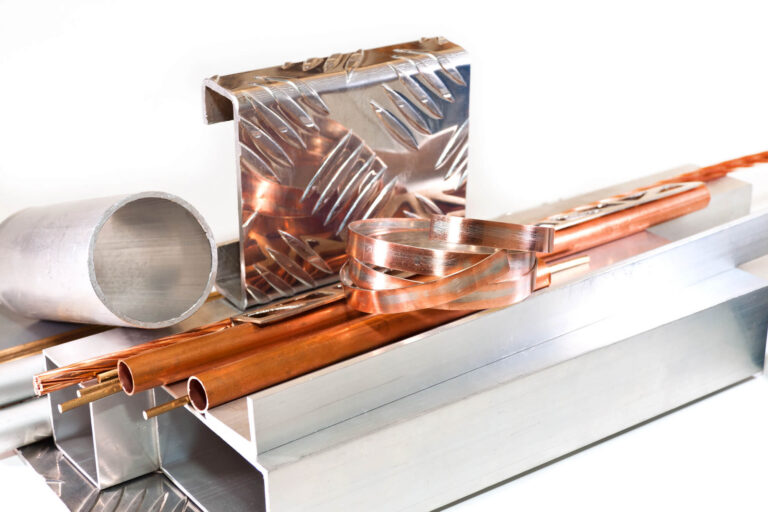
The technology is commonly used to recover aluminium, copper, and brass from shredded scrap, electronic waste, and end-of-life vehicles.
Unlike conventional magnetic separators, eddy current systems can separate conductive non-ferrous metals without attracting them directly to a magnet.
3. Sensor-Based Sorting Technology
Sensor-based sorting improves metal recovery by identifying materials according to their physical and chemical properties.
These systems use specialised sensors to recognise different metals as they move along conveyor belts. Automated air jets or mechanical equipment then direct the identified materials into separate collection areas.
Common technologies include X-ray fluorescence, laser-induced breakdown spectroscopy, infrared sensors and optical sorting systems.
These methods are particularly useful for separating mixed metal grades and identifying valuable alloys. Accurate sorting also reduces contamination and improves the quality of recovered materials.
4. X-Ray Fluorescence (XRF) Technology
X-ray fluorescence is an analytical technology used to identify the elemental composition of metals and alloys.
The equipment directs X-rays towards a material sample, causing its elements to emit characteristic fluorescent X-rays. A detector analyses these signals to identify the elements present.
XRF analysers are widely used to distinguish between stainless steel, copper alloys, nickel alloys and aluminium alloys.
This technology helps recycling facilities identify valuable materials before processing. It also prevents incompatible metal grades from being mixed, improving the quality and potential value of recovered scrap.
Portable XRF analysers are useful for inspecting individual scrap items, while automated systems support larger sorting operations.
5. Laser-Induced Breakdown Spectroscopy (LIBS)
Laser-induced breakdown spectroscopy is another advanced technology used to identify and classify metals.
LIBS directs a high-energy laser pulse towards a material’s surface. This creates a small plasma that produces light containing information about the material’s elemental composition.
Specialised detectors analyse the emitted light to identify different elements.
LIBS is particularly useful for distinguishing aluminium alloys and other mixed metal grades that may look similar during visual inspections. Its ability to identify multiple elements makes it valuable for automated scrap sorting and high recovery operations.
6. Hydrometallurgical Processing
Hydrometallurgy uses chemical solutions to extract metals from ores, industrial residues, and recycled materials.
The process generally involves three stages: leaching, separation, and metal recovery. During leaching, chemical solutions dissolve selected metals. The resulting liquid is then treated to separate the target metals from impurities.
Finally, metals can be recovered through precipitation, solvent extraction or electrowinning.
Hydrometallurgical processing is useful for recovering copper, nickel, cobalt and precious metals from electronic waste and industrial residues.
A 2025 review published in RSC Sustainability reported that certain hydrometallurgical processes, particularly acid leaching and solvent extraction, can achieve metal recovery efficiencies of up to 95% in electronic waste applications. Actual results depend on the material and processing conditions.
7. Pyrometallurgical Processing
Pyrometallurgy uses high temperatures to extract and recover metals from scrap, electronic waste, and metal-bearing residues.
The process involves heating materials in specialised furnaces to melt metals or trigger chemical reactions that separate valuable components from unwanted substances.
Smelting is one of the most established techniques. During processing, metals separate from slag and other unwanted materials, allowing valuable metals to be collected for further refining.
Common applications include recovering copper, lead, nickel, and precious metals.
Although pyrometallurgy can process complex materials, it requires substantial energy and suitable emission-control systems.
8. Electrostatic Separation
Electrostatic separation uses differences in electrical conductivity and surface properties to separate materials.
During processing, particles pass through an electrically charged field. Conductive and non-conductive materials respond differently, allowing them to move into separate collection areas.
This technology is useful for processing finely shredded electronic waste, metal powders and mixed material fractions.
For example, electrostatic separators can help separate conductive copper and aluminium particles from non-conductive plastics.
Particle size, moisture content and material preparation influence separation performance.
9. Artificial Intelligence and Automated Sorting
Artificial intelligence (AI) and machine learning are increasingly being introduced into modern metal recycling facilities.
These technologies analyse information collected by cameras, sensors and automated inspection equipment to recognise different materials.
AI-powered systems can identify metal types, distinguish between scrap grades and detect unwanted contaminants. Machine learning can also improve sorting decisions by analysing patterns in previously processed materials.
Combining AI with XRF and LIBS can improve alloy identification and support more accurate separation.
These developments help facilities process larger volumes of scrap while reducing material losses.
10. Bioleaching Technology
Bioleaching uses microorganisms to extract metals from waste materials through biological and chemical reactions.
Certain bacteria and other microorganisms produce substances that help dissolve metals from electronic waste, mine residues and industrial materials.
The dissolved metals can then be separated and recovered through additional processing techniques.
Bioleaching is being investigated for recovering copper, nickel and cobalt. It may provide an alternative to some conventional chemical extraction processes.
However, processing times can be longer, and carefully controlled conditions are required. Its commercial suitability depends on the material, recovery targets and operating requirements.
Statistics on Metal Recovery Technologies
Research highlights the potential of advanced technologies to improve metal recovery and reduce environmental impact.
A 2025 review published in RSC Sustainability reported that hydrometallurgical methods can achieve up to 95% metal recovery efficiency in certain electronic waste applications.
The same review identified a potential 30–50% reduction in environmental impact from biometallurgical approaches compared with conventional chemical methods.
The research also reported recovery efficiencies of 80–95% for hydrometallurgical processes involving precious metals and 50–85% for certain biometallurgical applications. These figures vary according to the materials and processes studied.
These findings demonstrate the importance of selecting suitable technologies to recover valuable materials efficiently.
How Do Metal Recovery Technologies Improve Efficiency?
Modern technologies improve recycling operations by increasing sorting accuracy and recovering materials that might otherwise remain in waste streams.
Advanced sensors identify different metal types and alloys, while magnetic and eddy current separators remove ferrous and non-ferrous materials. Chemical and biological extraction methods recover metals from complex residues.
Automated equipment also reduces manual handling and helps facilities process larger quantities of scrap. Producing cleaner metal fractions improves material quality and makes recovered metals more suitable for manufacturing.
Together, these methods reduce waste, conserve valuable resources, and support more efficient metal recycling.
What Factors Influence the Choice of Metal Recovery Technology?
Not every technology is suitable for every recycling operation. Facilities must consider the type of metal, particle size, contamination levels, and composition of incoming materials.
Processing costs, energy consumption, recovery targets, and environmental requirements also influence equipment selection.
For example, magnetic separation is suitable for ferrous metals, while eddy current systems are designed for conductive non-ferrous materials. Hydrometallurgy may be more appropriate for extracting metals from complex electronic waste.
Many facilities combine different technologies to achieve better separation and higher recovery.
The Future of Metal Recovery Technologies
Metal recovery is becoming increasingly dependent on automation, advanced sensors, and more efficient extraction processes.
Developments in artificial intelligence, robotics and real-time material identification could help recycling facilities process mixed scrap with greater accuracy. Research into greener solvents and bioleaching may also improve the recovery of valuable metals from electronic waste and industrial residues.
A greater focus on energy efficiency, process control and material identification could help reduce waste and environmental impact.
As recycling requirements evolve, investment in suitable recovery technologies will remain important for conserving valuable resources and supporting a circular economy.
Metal recovery technologies play an essential role in modern recycling operations. Magnetic separation, eddy current systems, sensor-based sorting, XRF, LIBS, and advanced extraction processes each offer different advantages.
Combining these methods allows facilities to recover a wider range of valuable metals, improve material quality, and reduce waste. Continued technological development will create further opportunities to improve metal recycling and conserve natural resources.